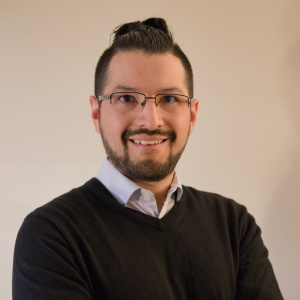
 School of Public Policy (SPP) Professor David Mitre Becerril recently co-authored an Original Investigation in the area of public health with JAMA Network Open. Alongside Professors Aaron Chalfin (University of Pennsylvania) and Brandon del Pozo (Brown University), their paper “Overdose Prevention Centers, Crime, and Disorder in New York City” was published earlier this month.
Their research question focused on “What trends in crime and disorder were associated with the opening of 2 overdose prevention centers (OPCs) in New York City (NYC) in November 2021?” The goal of their report was to study concerns about OPCs leading to increases in crime and disorder. In order to conduct their research the team tracked 911 and 311 phone calls as well as reported crime and disorder complaints. They studied two OPCs and 17 syringe service programs between January 1, 2019 to December 31, 2022.
Findings saw no significant increase in crime where OPCs were located, but did see a statistical decline in police narcotics enforcement. This including an over 80% reduction in low-level drug possession arrests and over 50% reduction in weapons possession arrests. Thus, “…observations suggest the expansion of OPCs can be managed without negative crime or disorder outcomes.” The team discussed their findings with JAMA Network Open Conversations following their publication.
Following the report, The New York Times released an opinion essay entitled “Do Safe Injection Sites Increase Crime? There’s Finally an Answer.” Vice also summarized the team’s work in “The First US Safe Injection Sites Did Not Increase Crime: Study.” In this specific article, Senior Reporter Manisha Krishnan connected with OnPoint Executive Director Sam Rivera about the impact of OPCs. Sam noted that OPCs have been utilized almost 100,000 times and collected almost 2 million units of hazardous waste material.
Gothamist also printed a feature entitled “Overdose prevention centers did not increase crime in NYC neighborhoods, study finds.” Their piece discussed the timing of the report in relation to Mayor Eric Adams call to expand overdose prevention centers while facing local pushback and lack of public funding.
We look forward to seeing the future impact of this report.