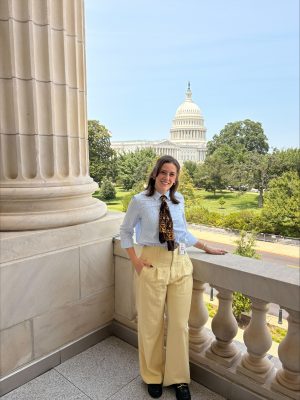
Connecticut Foodshare Resource Engagement Coordinator and UConn School of Public Policy alumna Jackie Riberdy ’22 MPP recently traveled to Washington, D.C., to represent Connecticut at Feeding America’s Gen Z Food and Hunger Summit. Through workshops and meetings with congressional offices, she joined emerging anti-hunger leaders from across the country to advocate for policies that improve food access. We caught up with Jackie to discuss her career, her experience at the summit, and why she believes ending hunger starts with public policy.
Q1: Tell us about yourself and your role at Connecticut Foodshare.
I graduated from UConn’s Master of Public Policy program in 2022 through the Fast-Track program, and shortly after graduation I joined Connecticut Foodshare as the Resource Engagement Coordinator on our Network and Programs team.
Our department supports food pantries, soup kitchens, and shelters across Connecticut. My role is centered on building connections and supporting our partners through trainings, webinars, conferences, and advocacy efforts. Additionally, I publish a monthly newsletter that shares resources beyond food, update our partner website, identify cost-saving resources, and work with the Connecticut State Comptroller’s Office to convene quarterly meetings focused on the social determinants of health. Those meetings bring together municipalities and organizations across the state to improve communication and ensure we’re connecting people with the resources they need.
Q2: How did your experience at UConn SPP prepare you for a career in food security and public policy?
The SPP program set a great foundation for understanding how nonprofits operate and how they interact with external stakeholders. As I became more interested in nonprofit work, I completed the nonprofit certificate, which was incredibly valuable. I also came to appreciate my economics coursework much more than I expected.
One of the biggest takeaways was project management. I use those skills every day—I always have my Gantt chart open while planning conferences and coordinating projects. Professor Deneen Hatmaker’s classes really helped shape how I organize my work.
My favorite course was Nonprofit Advocacy, Government Relations and Law, taught by Jason Jakubowski. It gave me a strong understanding of nonprofit advocacy, government relations, and how to build an effective policy strategy.
Q3: Jason Jakubowski is both a UConn SPP alumnus and now your CEO at Connecticut Foodshare. What has that full-circle experience been like?
It’s been a really unique experience. Jason is an outstanding public servant and leader. He guided the merger of Foodshare and the Connecticut Food Bank, and he’s deeply committed to strengthening Connecticut’s nonprofit sector.
Even as a professor, he was incredibly engaged with students. Looking back, I appreciate how dedicated he was to answering questions and making sure we understood how advocacy works in practice. Now, getting to work alongside him has been an incredible learning opportunity because I see those same leadership qualities every day.
Q4: How did you learn about Feeding America’s Gen Z Food and Hunger Summit, and what made you want to attend?
Feeding America, which supports nearly 200 food banks across the country, regularly offers professional development opportunities. Tyson Foods sponsored approximately 50 food bankers to attend the summit, and my colleagues encouraged me to apply.
I’ve always been interested in advocacy, but it can feel intimidating. This felt like the perfect opportunity to build my skills while knowing I’d have support. I also knew I’d be surrounded by people my age who care deeply about ending hunger, and that made it an experience I didn’t want to miss.
Q5: What did it mean to represent Connecticut Foodshare and Connecticut at a national summit on hunger?
I was incredibly proud. Connecticut Foodshare is recognized as a leader among food banks, and we have a really strong partnership network across the state.
I also felt proud to represent Connecticut because we have strong support for addressing hunger through policy. In many places, advocates are still fighting to convince people that hunger is a systemic issue. In Connecticut, the conversation is more about how we continue strengthening those supports. It was rewarding to share the innovative work happening here while also learning from food banks across the country.
Q6: Were there any outcomes or results from your meetings with congressional offices during the summit?
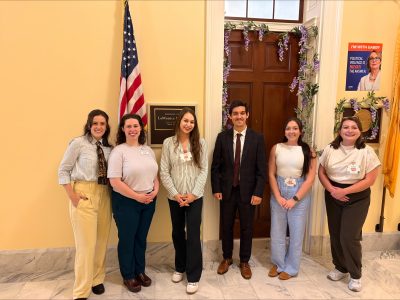
During the summit, participants were assigned federal legislation to advocate for, and my group focused on the Modern WIC Act. The legislation would make the virtual certification and appointment options introduced during the COVID-19 pandemic permanent, helping reduce barriers for families accessing WIC benefits.
After a full day of learning and preparation, we met with congressional offices and tailored our conversations based on each audience. We shared how maintaining these flexibilities would improve access for working families, especially those facing transportation, childcare, and scheduling challenges.
One of our meetings was with staff from Representative LaMonica McIver’s (D-NJ) office. Following our advocacy efforts, Representative McIver signed on as a co-sponsor of the Modern WIC Act. Seeing a policy issue we advocated for gain additional support was incredibly rewarding and reinforced the importance of bringing frontline experiences to policymakers.
I also appreciated the opportunity to experience Washington, D.C., beyond the meetings themselves. One memorable moment was taking a photo from Representative Jim McGovern’s balcony, a reminder of the importance of showing up, engaging in advocacy, and using our voices to influence policy.
Q7: What were some of your biggest takeaways from the summit?
One lesson really stayed with me: food bankers are the experts. Throughout the summit, we were reminded that policymakers need our experiences and expertise to make informed decisions.
I expected meeting with congressional offices to be intimidating, but the experience showed me that advocacy is about sharing knowledge and connecting policy decisions to the people they impact. I left feeling much more confident in my ability to advocate for meaningful policy change and bring frontline experiences into conversations with policymakers.
Q8: What message would you like to share with current and future UConn SPP students about addressing hunger?
The biggest thing I hope students understand is that hunger is a systemic issue—it’s not an individual moral failing.
We have enough resources to end hunger. We know policies can reduce food insecurity because we’ve seen them work. Addressing hunger ultimately comes down to policy choices and political will. If future public policy professionals keep listening to people with lived experience and remain committed to evidence-based solutions, they can make a real difference.